2026-10-15
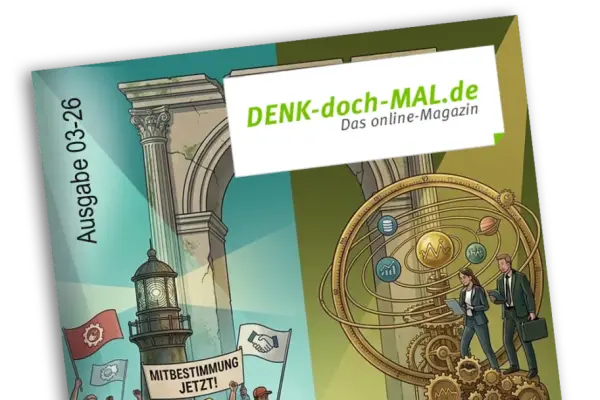
The Centre of Cooperation RUB/IGM contributed two articles to the latest issue, ‘Work, Education and Democracy’ (03-26), of the online magazine DENK-doch-MAL.
The article ‘Work and Democracy – The Role of Academia between Detachment and Engagement’ by Manfred Wannöffel has a twofold objective. Firstly, it provides an overview of recent research findings on the structural tension between work and democracy, which have emerged in recent years against the backdrop of the economic and environmental polycrisis and the rise of far-right movements in the world of work and society. In view of the growing presence of far-right political actors, the article then goes on to reflect on the role of academia. For – so the thesis goes – academia is by no means value-neutral with regard to democracy and human dignity.
The article ‘Fragmented Solidarity? The Consequences of Platform Work for Cooperative and Solidarity-Based Forms of Work’ by Fabian Hoose and Sabrina Glanz discusses the rapidly growing significance of jobs arranged via digital platforms on the internet. These have reignited key debates on employment relationships, forms of work and social security systems. A closer examination of working conditions in the platform economy reveals a complex web of processes that contribute to the de-democratisation of work. Developments in platform work thus stand in tension with a model of work based on solidarity, cooperation and the collective representation of interests. However – as the article concludes – forms of work based on solidarity are central to democracy and the world of work.

Copyright © RUB/IGM 2026
Last update: Nov 02, 2026