2026-07-02
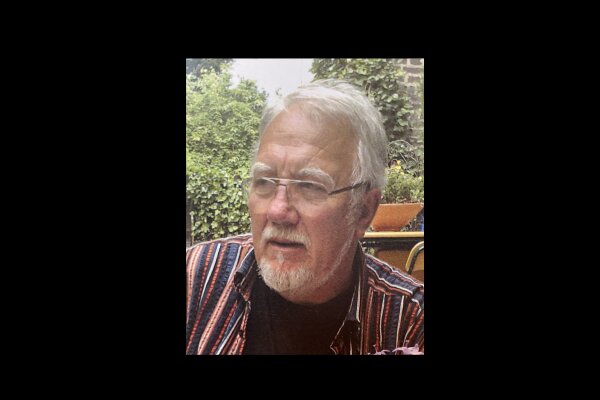
Ruhr University Bochum mourns the loss of Dr Erich Werthebach (8 March 1941 – 29 June 2026)
With the passing of Dr Erich Werthebach, Ruhr University Bochum and IG Metall have lost a figure who, over many decades, shaped a partnership between a university and a trade union that was unique in the Federal Republic of Germany. In this collaboration, as a graduate engineer and holder of a doctorate in social sciences, he combined technical, social and occupational science perspectives in a way that has ultimately remained of lasting significance for the development of Ruhr University’s knowledge transfer strategy to this day.
Erich Werthebach studied engineering in Siegen and, from 1971, went on to study social sciences in Bochum; it was through this combination of disciplines that his interest in bridging the gap between academia and the world of work – and vice versa – began to take shape. He played a key role in drafting the cooperation agreement concluded in 1975 between the Rectorate of Ruhr University Bochum and the Executive Board of IG Metall. After completing his doctorate, he took over as head of the newly founded ‘Centre of Cooperation Ruhr University Bochum/IG Metall (RUB/IGM)’ in 1979, thereby assuming responsibility for establishing a novel bridge-building institution in close cooperation with the RUB Rectorate and the nearby IG Metall Training Centre in Sprockhövel.
Under his leadership, the Centre of Cooperation RUB/IGM developed into a key platform for dialogue between academia, trade unions, business and politics until his departure in 2003. The aim of his collaborative work was to make academic findings applicable to the practical realities of the world of work and to facilitate the exchange of knowledge between both spheres. Using the then-innovative format of a lecture series, key issues concerning the future of work, co-determination, vocational training and the social and technical shaping of industrial transformation processes were discussed from the perspectives of academia and trade unions, thereby opening the doors of the university to employees from regional companies.
In his collaborative work, Dr Werthebach operated on the premise that technical progress and social development can only be conceived and shaped through joint, interdisciplinary efforts. The Centre of Cooperation RUB/IGM thus developed into an institution that is now recognised far beyond the Ruhr region as a model for innovative knowledge transfer strategies.
Dr Werthebach has made a significant contribution to the profile of the Ruhr University as a socially engaged, reform-oriented university. The current application for excellence submitted by the RUB and TU Dortmund University to establish a Ruhr Innovation Lab follows, in a sense, the tradition established by Dr Erich Werthebach with the Centre of Cooperation RUB/IGM.
Ruhr University Bochum and IG Metall have lost a highly esteemed colleague in Dr Erich Werthebach. Both institutions will honour his memory.
Ruhr University Bochum mourns the loss of Dr Erich Werthebach (8 March 1941 – 29 June 2026)
With the passing of Dr Erich Werthebach, Ruhr University Bochum and IG Metall have lost a figure who, over many decades, shaped a partnership between a university and a trade union that was unique in the Federal Republic of Germany. In this collaboration, as a graduate engineer and holder of a doctorate in social sciences, he combined technical, social and occupational science perspectives in a way that has ultimately remained of lasting significance for the development of Ruhr University’s knowledge transfer strategy to this day.
Erich Werthebach studied engineering in Siegen and, from 1971, went on to study social sciences in Bochum; it was through this combination of disciplines that his interest in bridging the gap between academia and the world of work – and vice versa – began to take shape. He played a key role in drafting the cooperation agreement concluded in 1975 between the Rectorate of Ruhr University Bochum and the Executive Board of IG Metall. After completing his doctorate, he took over as head of the newly founded ‘Centre of Cooperation Ruhr University Bochum/IG Metall (RUB/IGM)’ in 1979, thereby assuming responsibility for establishing a novel bridge-building institution in close cooperation with the RUB Rectorate and the nearby IG Metall Training Centre in Sprockhövel.
Under his leadership, the Centre of Cooperation RUB/IGM developed into a key platform for dialogue between academia, trade unions, business and politics until his departure in 2003. The aim of his collaborative work was to make academic findings applicable to the practical realities of the world of work and to facilitate the exchange of knowledge between both spheres. Using the then-innovative format of a lecture series, key issues concerning the future of work, co-determination, vocational training and the social and technical shaping of industrial transformation processes were discussed from the perspectives of academia and trade unions, thereby opening the doors of the university to employees from regional companies.
In his collaborative work, Dr Werthebach operated on the premise that technical progress and social development can only be conceived and shaped through joint, interdisciplinary efforts. The Centre of Cooperation RUB/IGM thus developed into an institution that is now recognised far beyond the Ruhr region as a model for innovative knowledge transfer strategies.
Dr Werthebach has made a significant contribution to the profile of the Ruhr University as a socially engaged, reform-oriented university. The current application for excellence submitted by the RUB and TU Dortmund University to establish a Ruhr Innovation Lab follows, in a sense, the tradition established by Dr Erich Werthebach with the Centre of Cooperation RUB/IGM.
Ruhr University Bochum and IG Metall have lost a highly esteemed colleague in Dr Erich Werthebach. Both institutions will honour his memory.

Copyright © RUB/IGM 2026
Last update: Jul 02, 2026